
Microconversion deep dive
The macro conversion goal
I recently worked with a SaaS company where their landing page conversion target was 1% end-to-end.
Their multi-step onboarding flow included 5 distinct friction steps in the user journey.
The micro-level impact
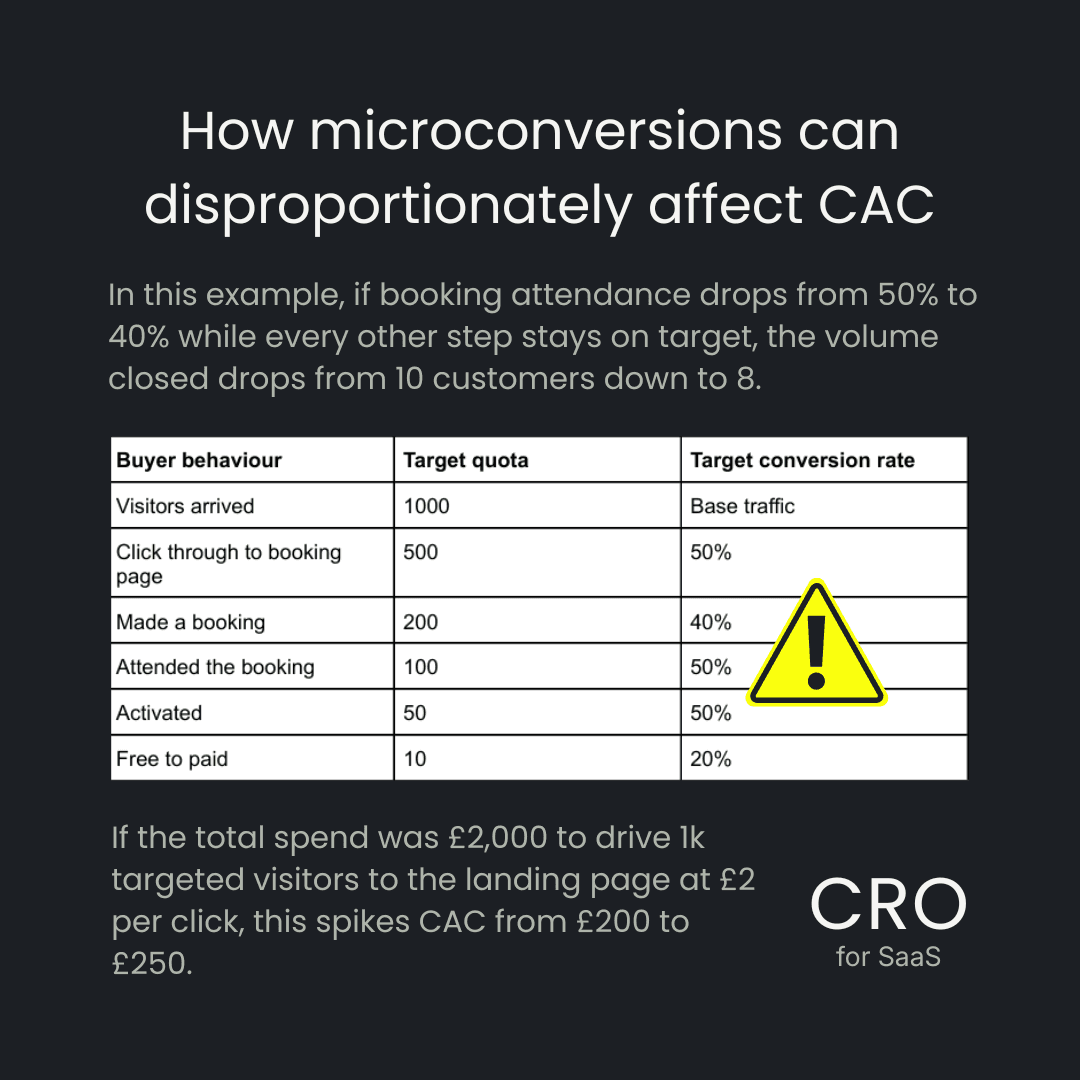
A 1% target initially looks like 1 in 100 visitors taking action. When I broke this down into micro conversions, the real numbers showed a different reality.
To reach the target of 1% of converting right through the funnel in practice, the actual target conversion rates on a micro level were between 20–50%, with a total of 5 steps needed to hit those targets.
Assuming the total spend was £2,000 to drive 1k targeted visitors to the landing page at £2 per click, these high micro-conversion rates put the funnel under immense pressure.
The revenue risk
Only when every micro-conversion step performs optimistically and on target, 1,000 visitors yield 10 paid users at £200 CAC:
Ad Spend: £2,000
Paid Users Acquired: 10
Customer Acquisition Cost (CAC): £200
If just one mid-funnel step drops, CAC can be affected disproportionately.
For example, if booking attendance drops from 50% to 40% while every other step stays on target, the volume closed drops from 10 customers down to 8.
Here’s how the figures then look:
Ad Spend: £2,000
Paid Users Acquired: 8
New Customer Acquisition Cost (CAC): £250
In this illustration, a reduction of 10 percentage points in just one microconversion spiked CAC by 25%.
Multi-reader landing page analysis
In SaaS, there's a common messaging challenge that's especially prevalent in developer tool marketing and other niches.
The user and the buyer are different people. They experience the problem in different ways and feel different pains.
Top down acquisition
The buyer is a key decision maker as they hold the purchasing power and the budget. They experience the pain on a macro level, through business outcomes.
Bottom up acquisition
The user feels the pain in their daily operations. They don't hold the purchasing power, but they often do have influence over purchasing decisions.
User vs buyer acquisition paths
Speaking only to the buyer won't attract grassroots adoption. Mapping to ALL the decision makers can help sales close faster and smoother.
Depending on the product, this sometimes means breaking a golden rule of marketing and speaking to both audiences on a homepage.
Companies I’ve noticed successfully tackling dual-ended acquisition in the developer tool space include:
Vercel: Leading with developer flow state, then translating that into faster iteration and shipping.
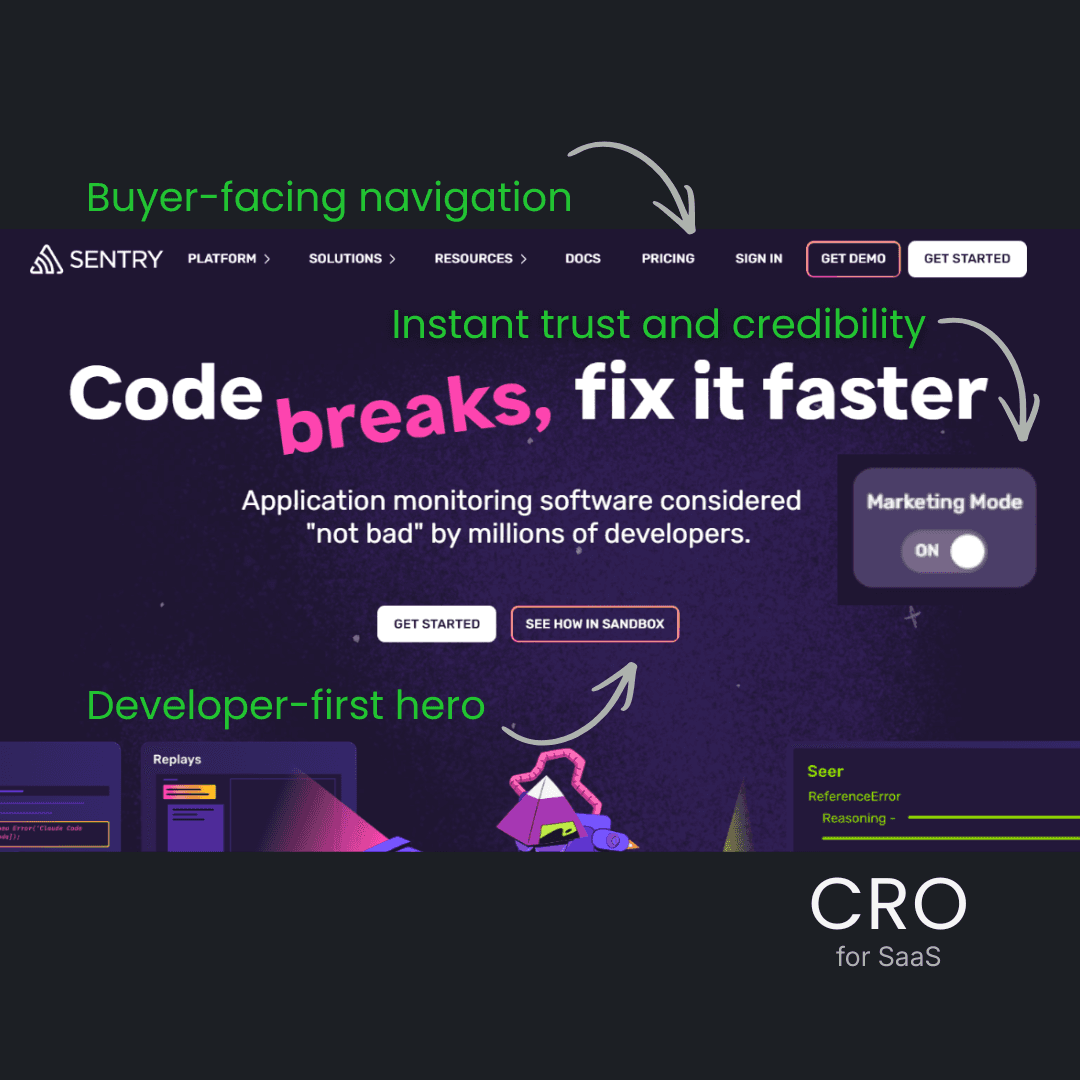
Sentry: Leading with debugging pain, then translating that into better reliability and fewer bottlenecks.
Supabase: Leading with open-source appeal for developers, then translating that into enterprise-scale performance and support.
The common thread is they all speak to the user first, then translate that messaging into a buyer outcome.